
Performance measures vs performance metrics in asset management
By Jarrod Chesher and Rachel Scott
In asset management, data drives decisions — but knowing how to interpret that data is essential.
Two terms you’ll often hear are performance measure and performance metric. They sound similar, but they mean different things — and understanding the difference can help you make better, faster, and more strategic asset management decisions.
What is a performance measure?
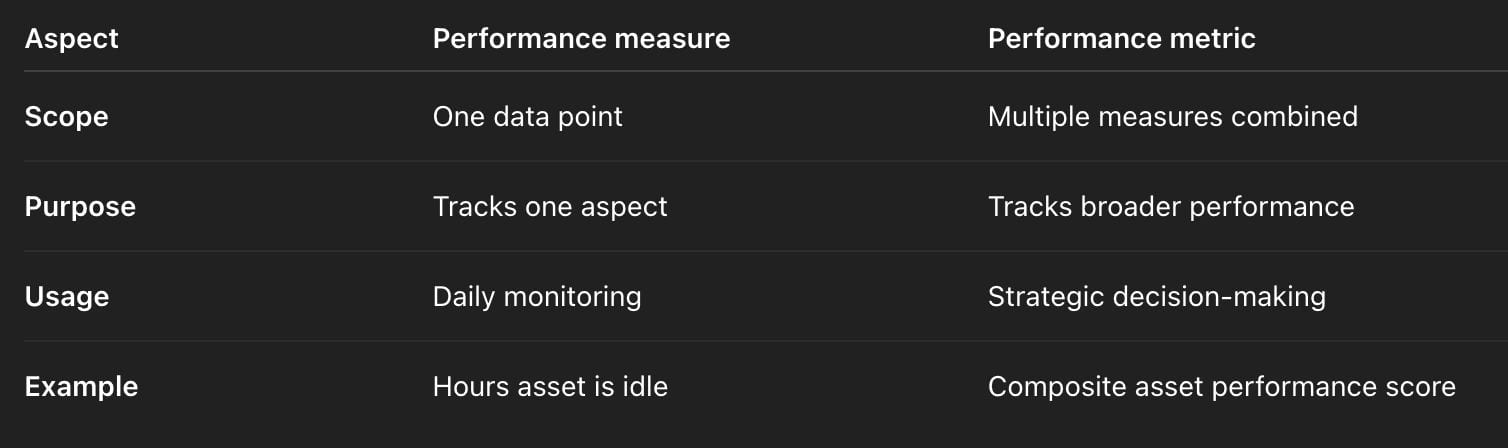
A performance measure is a single, specific data point that captures one aspect of asset performance.
It’s the raw figure that shows how an asset is performing in a particular area.
Think of performance measures as the ingredients in your asset management recipe.
Examples of performance measures:
- Downtime hours – the total time an asset is not operational in a month
- Maintenance cost – the amount spent maintaining an asset in a set period
- Inspection frequency – how often routine inspections are carried out
Measures are essential for tracking day-to-day operations. On their own, they’re useful, but they don’t tell the whole story.
💡 Related reading: The essential role of performance measures in asset management
What is a performance metric?
A performance metric combines several measures into a broader performance indicator.
Metrics show how well an asset — or group of assets — is supporting your business goals.
Examples of performance metrics:
- Asset reliability metric – combines downtime hours, maintenance costs, and breakdown frequency into a single reliability score
- Operational efficiency metric – includes utilisation rates, energy consumption, and maintenance response times
Metrics are closely tied to strategic objectives. They give you a bigger-picture view so you can make long-term, informed decisions.
💡 Related reading: Harnessing the power of performance metrics in asset management
Measures vs metrics: the key differences
Why this matters for asset managers
When you understand the difference between measures and metrics, you can improve both day-to-day operations and long-term asset strategies.
- Better decision-making – Measures help you pinpoint problems. Metrics help you see the impact on business goals.
- Strategic alignment – Metrics track progress towards your asset management objectives and guide investment decisions.
- Clearer reporting – Stakeholders get both detailed operational data and a high-level view.
- Focused improvement – Measures show where to act; metrics show why it matters.
💡 Related reading: The ultimate guide to asset management KPIs
Bringing it together
Both performance measures and performance metrics are essential in asset management.
- Measures provide the detail you need to run assets effectively.
- Metrics show how those measures contribute to your bigger goals.
Together, they form the backbone of a data-driven asset management approach that improves asset health, operational efficiency, and business results.
In short, a measure is a snapshot; a metric is the bigger picture. Use both, and you’ll have a clear, complete view of asset performance.
💡 Related reading: How to develop a comprehensive asset management strategy