
Reliability engineering & Oppenheimer: A historic connection
By Rachel Scott and Jarrod Chesher
Reliability engineering, a discipline focused on enhancing asset performance and mitigating risks, has a deep-rooted history of innovation and impact.
For insights into modern reliability engineering, read our article: Reliability engineering: enhancing asset reliability for sustainable operations
Julius Robert Oppenheimer: A visionary scientist and engineer
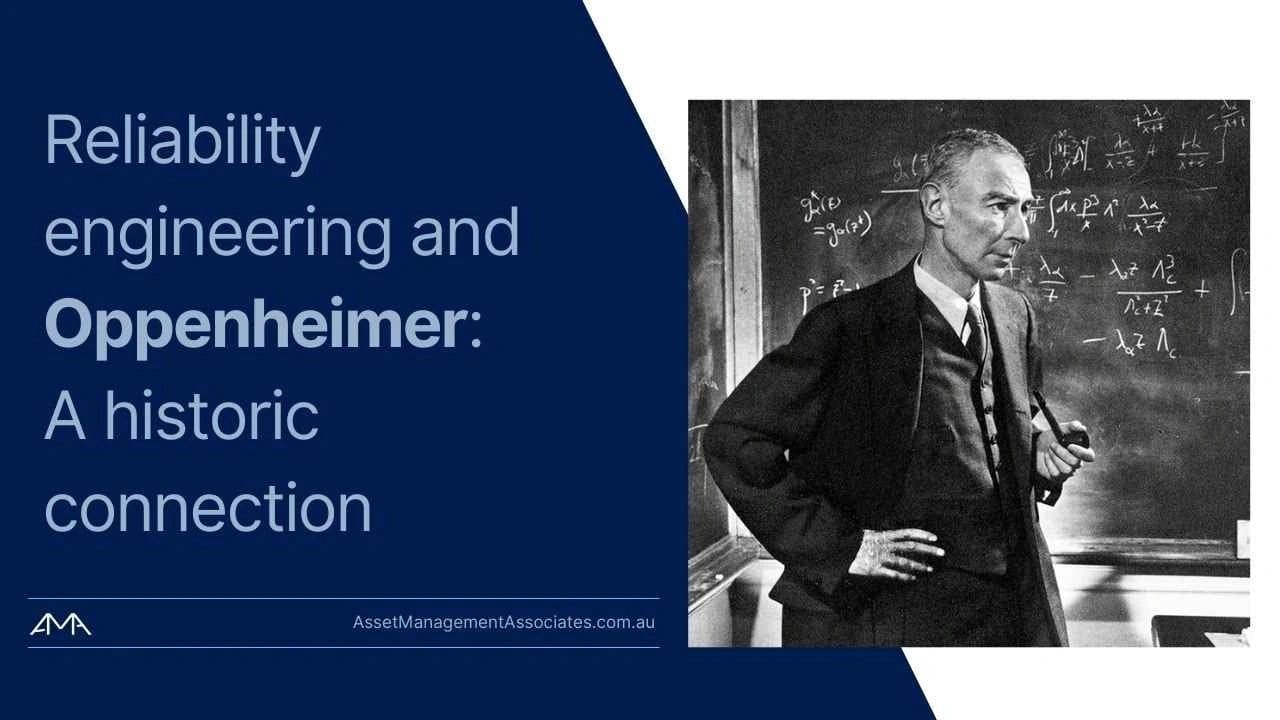
Julius Robert Oppenheimer, born on 22nd April 1904, was an American theoretical physicist and professor. Throughout his career, he made significant contributions to quantum mechanics and theoretical physics. However, his most notable role came during World War II when he led the Manhattan Project, a top-secret research initiative aimed at developing the atomic bomb. Oppenheimer's leadership and scientific prowess were instrumental in the successful development of this groundbreaking technology.
The Manhattan Project and reliability engineering
The Manhattan Project marked a historic collaboration of scientists, engineers, and researchers from various disciplines. At its core, the project exemplified the principles of reliability engineering. Learn more about reliability principles in our guide: Introduction: Failure Mode Effect & Criticality Analysis (FMECA)
The development of the atomic bomb required the utmost precision, understanding of failure modes, and risk mitigation strategies to ensure success. Reliability engineering principles applied during the Manhattan Project included:
Risk analysis
Oppenheimer and his team conducted rigorous risk analysis to assess the potential failure modes and consequences of the atomic bomb's design and functionality. This analysis guided engineering decisions and enhanced the reliability of the final product.
Proactive testing and validation
The Manhattan Project involved extensive testing and validation of components and theories. Through proactive experimentation and iterative improvements, Oppenheimer's team optimised the bomb's design and functionality.
Collaboration and cross-disciplinary expertise
The success of the Manhattan Project relied on collaboration among scientists, engineers, and experts from diverse backgrounds. This interdisciplinary approach fostered a holistic understanding of the technology and its potential challenges.
Quality management
The Manhattan Project adhered to strict quality management principles to ensure consistent performance and reliability. Every aspect of the project was subject to stringent quality control measures to minimise deviations and uncertainties.
Impact and legacy
The successful culmination of the Manhattan Project resulted in the detonation of the first atomic bomb on 16th July 1945 in New Mexico. This event forever altered the course of history and shaped the future of science, engineering, and geopolitics. The atomic bomb's development contributed significantly to the end of World War II, but it also led to profound ethical questions and the onset of the nuclear age.


A complex legacy
While Oppenheimer's scientific achievements are remarkable, his involvement in the development of nuclear weapons also raises complex ethical considerations. The use of atomic bombs on Hiroshima and Nagasaki resulted in devastating human suffering and raised important moral questions about the implications of such powerful technologies.
Conclusion
The connection between reliability engineering and Julius Robert Oppenheimer is a testament to the power of scientific inquiry and its profound impact on society. The Manhattan Project exemplified the application of reliability engineering principles in the pursuit of groundbreaking innovation. Today, reliability engineering stands as a foundational discipline in ensuring efficient asset management and safe operations.
As we look at the legacy of Oppenheimer, it is essential to acknowledge the complexity of his impact and the ethical challenges that arose from his scientific endeavours. His contributions serve as a reminder of the need for responsible and ethical considerations in scientific research and technological advancements.
At AMA, we honour the spirit of scientific exploration and innovation while recognising the importance of ethical decision-making in all aspects of our work. Our reliability engineering and asset management consultancy services are designed to assist organisations in optimising asset performance while adhering to the highest standards of ethics and responsibility.
Need help implementing reliable and ethical engineering practices in your organisation? Contact us today to learn how we can support your journey towards innovation and excellence.
Join our growing community of asset management professionals. Follow us on LinkedIn and be part of the conversation.