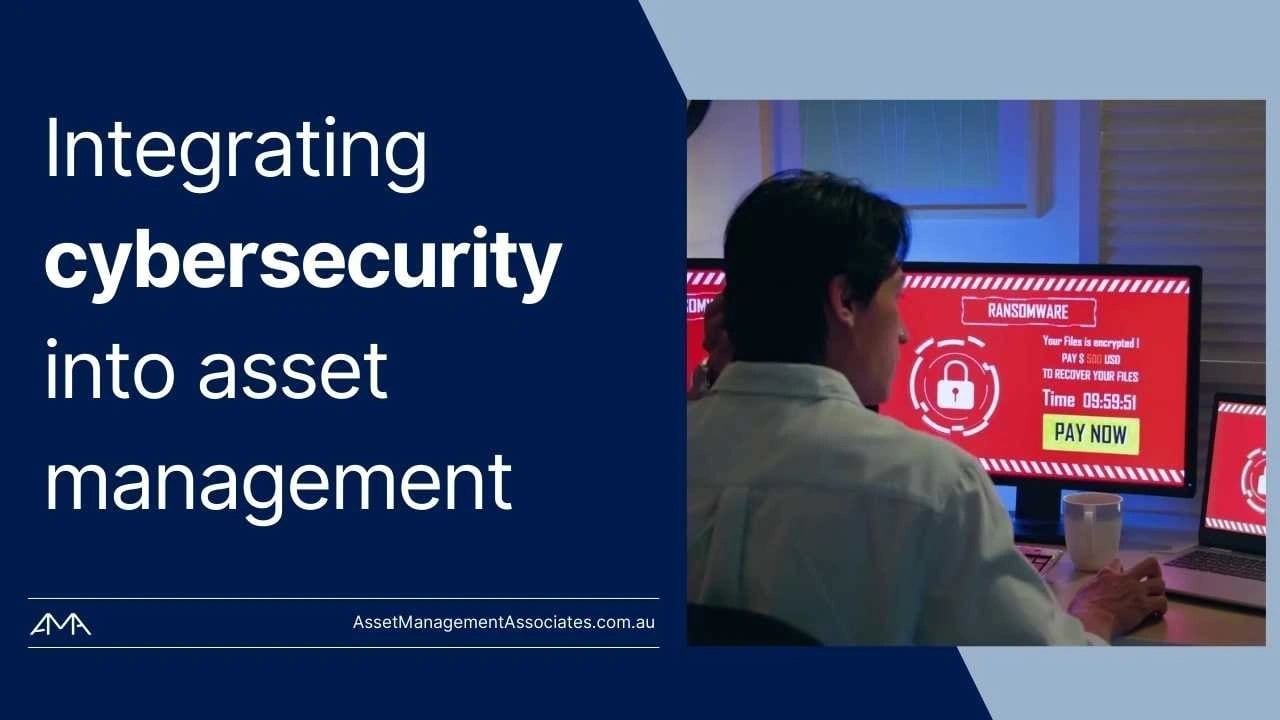
Integrating cybersecurity into asset management
By Jarrod Chesher and Rachel Scott
Why cybersecurity matters in asset management
In an increasingly interconnected world, cybersecurity has become a critical concern for all industries, including asset management. The integration of digital technologies, IoT devices, and cloud-based asset management systems has created new vulnerabilities and cyber threats. A single cyber attack can lead to data breaches, operational disruptions, and financial losses.
Integrating robust cybersecurity measures into your asset management strategy is essential to ensuring the integrity, availability, and confidentiality of your assets.
Key cybersecurity threats in asset management
1. Ransomware attacks
Ransomware encrypts critical data, making it inaccessible until a ransom is paid. These attacks can halt operations and cause severe financial damage.
2. Data breaches
Unauthorised access to sensitive data can compromise confidential information, leading to legal and reputational harm.
3. Malware and viruses
Malicious software can infiltrate asset management systems, disrupting operations and damaging critical equipment.
4. Insider threats
Employees or contractors with access to critical systems may intentionally or unintentionally pose cybersecurity risks.
5. Phishing attacks
Phishing scams trick employees into revealing sensitive information or downloading malware, compromising system security.
How to integrate cybersecurity into asset management
1. Conduct a cybersecurity risk assessment
Begin with a comprehensive cyber risk assessment to identify vulnerabilities in your asset management system. Prioritise risks based on their potential impact.
2. Implement strong access controls
- Use multi-factor authentication (MFA) to secure system access.
- Apply role-based access controls (RBAC) to limit user permissions.
- Conduct regular access reviews to prevent unauthorised access.
3. Encrypt data
Protect sensitive asset data by encrypting it at rest and in transit, ensuring that even if intercepted, it remains unreadable to unauthorised users.
4. Deploy intrusion detection and prevention systems (IDPS)
IDPS can monitor network traffic for suspicious activity and take action to mitigate threats before they cause significant damage.
5. Regularly update and patch systems
- Apply security patches and software updates promptly to fix vulnerabilities.
- Use automated tools to track and manage updates across all devices.
6. Train employees on cybersecurity awareness
- Conduct regular cybersecurity training sessions for staff.
- Educate employees on how to recognise phishing attempts, social engineering, and malware threats.
- Implement simulated phishing attacks to test employee awareness.
7. Develop an incident response plan
Create a detailed incident response plan (IRP) outlining:
- Steps to take in case of a cybersecurity breach.
- Key personnel responsible for handling incidents.
- Protocols for data recovery and business continuity.
8. Conduct regular security audits
Perform frequent security audits and penetration testing to identify vulnerabilities and measure the effectiveness of your cybersecurity measures.
Case study: cybersecurity in asset management at Siemens
Siemens, a global leader in industrial automation and asset management, has implemented a multi-layered cybersecurity approach to protect its digital assets.
- Risk Assessment: Siemens continuously evaluates its asset management system for potential cyber threats.
- Access Controls: The company enforces strict user authentication and role-based access restrictions.
- Encryption & Monitoring: Siemens encrypts asset data and uses real-time monitoring tools to detect anomalies.
- Employee Training: Regular cybersecurity training ensures employees remain vigilant against cyber threats.
By adopting these cybersecurity strategies, Siemens has enhanced asset security, operational resilience, and regulatory compliance.
Strengthen your asset management with cybersecurity
Integrating cybersecurity into asset management is crucial for safeguarding operations, preventing cyber threats, and ensuring the long-term resilience of your assets.
By implementing strong access controls, encryption, IDPS, and cybersecurity awareness programs, organisations can protect their critical infrastructure and digital assets from evolving cyber risks.
Need help securing your asset management system? Contact us today to learn how we can strengthen your cybersecurity strategy.
Join our growing community of asset management professionals. Follow us on LinkedIn and be part of the conversation.
Related articles: