How to create sustainable supply chains
By Jarrod Chesher and Rachel Scott
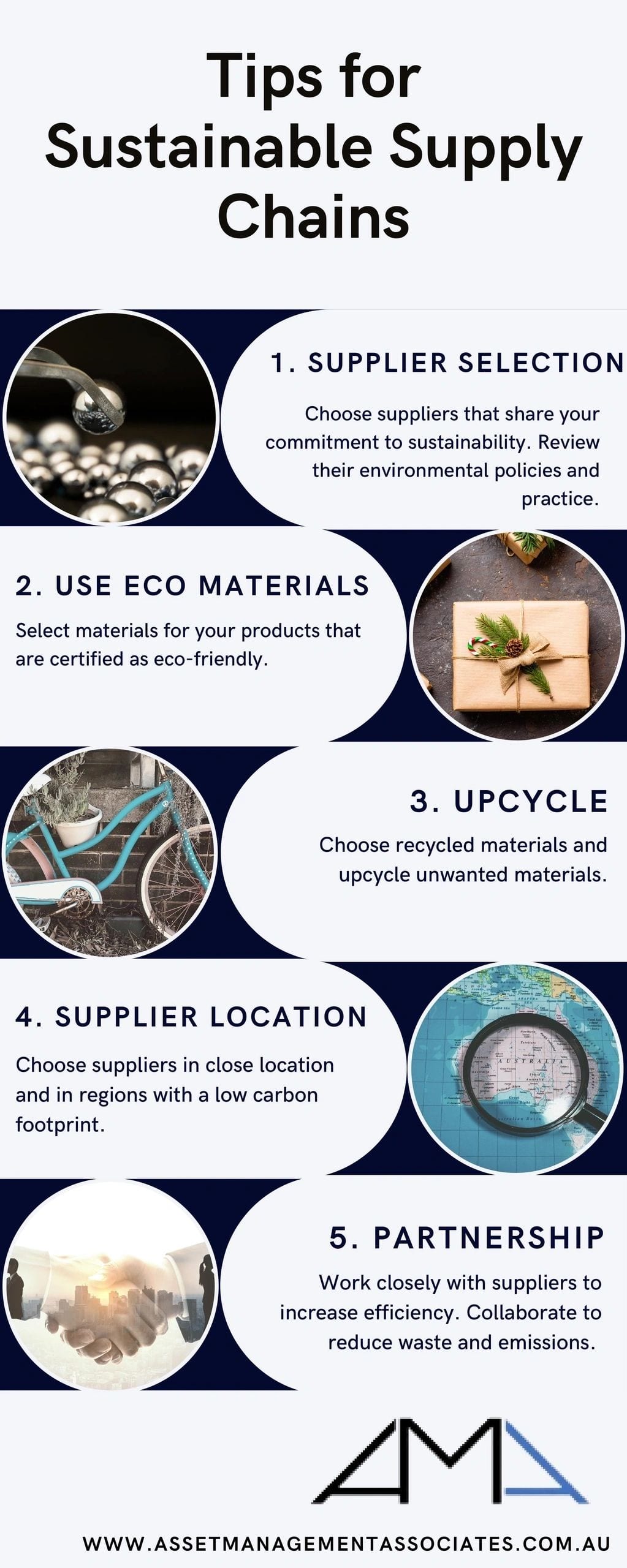
Sustainability is no longer a fringe concern—it’s a business imperative. With consumers increasingly willing to pay a premium for eco-friendly products, creating a sustainable supply chain can offer a competitive edge while reducing environmental impact. Here are five actionable tips to improve the sustainability of your supply chain.
1. Partner with sustainable suppliers
Your suppliers play a crucial role in the sustainability of your supply chain.
- Assess Environmental Policies: When selecting suppliers, prioritise those with strong environmental policies and practices.
- Evaluate Manufacturing Processes: Consider the energy, water, and material usage of your suppliers' operations. Collaborate with those who actively minimise their environmental impact.
Pro Tip: Include sustainability criteria in your supplier selection process to ensure alignment with your values.
2. Choose environmentally friendly materials
Materials matter. Opt for eco-friendly options to reduce your environmental footprint.
- Certified Eco-Friendly Materials: Look for certifications that verify sustainable sourcing and production.
- Recycled Materials: Using recycled materials not only conserves resources but also lowers the energy required for production.
While some options may come at a higher cost, the long-term benefits to your brand and the planet make it a worthwhile investment.
3. Source locally when possible
The closer your suppliers, the lower the carbon footprint of transportation.
- Local Suppliers: Reduce transportation-related emissions by choosing suppliers near your operations.
- Low-Carbon Regions: If local sourcing isn’t feasible, partner with suppliers in areas with a low carbon footprint.
Related Reading: Explore How Sustainability in Asset Management Can Reduce Business Costs for more insights.
4. Regularly review and optimise your supply chain
Sustainability is an ongoing process.
- Conduct Regular Audits: Identify inefficiencies and areas for improvement.
- Collaborate with Suppliers: Work together to reduce waste, emissions, and inefficiencies.
This proactive approach can enhance sustainability while cutting costs and streamlining operations.
5. Communicate your commitment to sustainability
Let your customers know about your efforts. Highlight your sustainable practices in marketing materials to build trust and attract eco-conscious consumers.
Building a sustainable supply chain benefits your business, your customers, and the planet. By choosing eco-conscious suppliers, using sustainable materials, sourcing locally, and continuously optimising your operations, you can reduce your environmental impact while gaining a competitive edge.
If you’re ready to improve the sustainability of your asset management practices, contact us today for tailored support.
Join our growing community of asset management professionals. Follow us on LinkedIn and be part of the conversation.