
ESG: What is it and why you should care
By Jarrod Chesher and Rachel Scott
Environmental, social, and governance (ESG) factors are gaining prominence among investors, customers, and organisational leaders. Many asset managers are integrating ESG considerations into their objectives to mitigate risk and enhance performance. But what exactly is ESG, and why does it matter? This article breaks down the basics of ESG and its growing significance.
What is ESG?
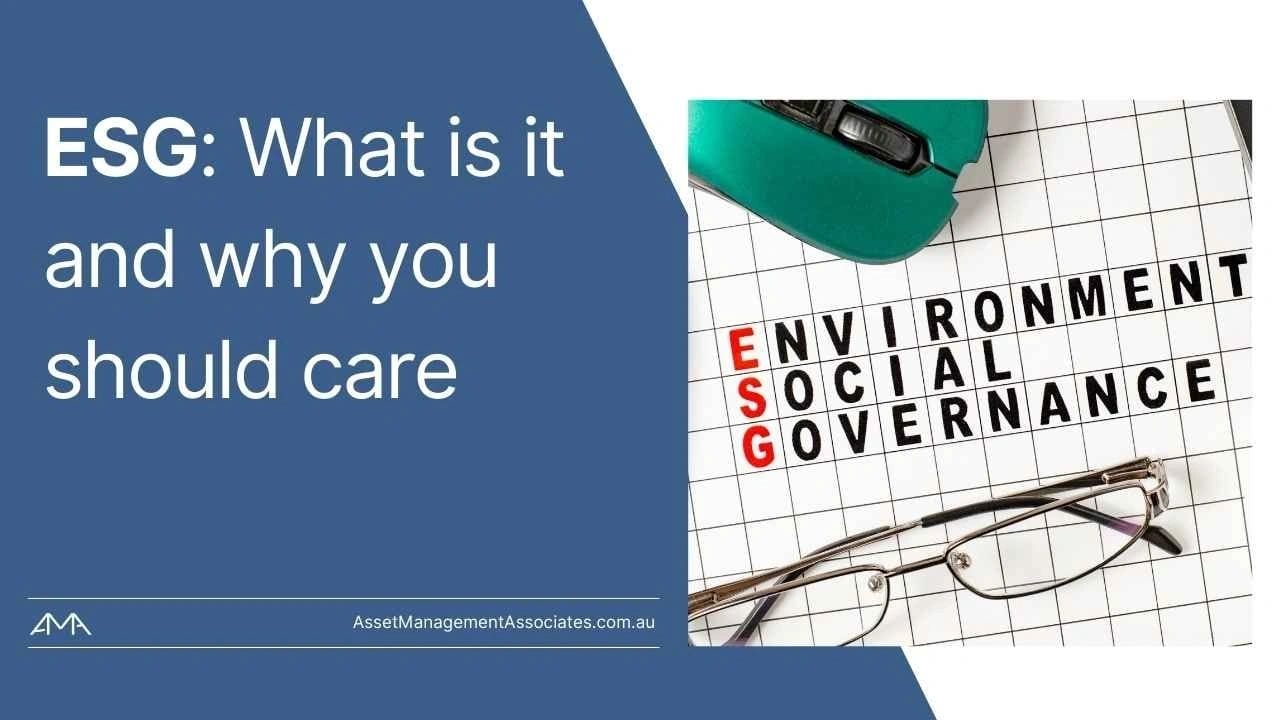
ESG stands for environmental, social, and governance—the three key pillars of sustainability.
- Environmental factors: Carbon footprint, water usage, and waste management practices.
- Social factors: Employee diversity and inclusion, human rights policies, and supply chain management.
- Governance factors: Board diversity, executive compensation, and anti-corruption policies.
These pillars are interconnected. For instance, a company’s carbon footprint can influence water usage, while human rights policies may affect employee diversity.
ESG vs. sustainability
While ESG and sustainability are often used interchangeably, they are distinct concepts.
- Sustainability: Focuses on meeting current needs without compromising future generations' ability to meet theirs, ensuring a world that supports life as we know it.
- ESG: Provides a framework to measure and manage sustainability, offering tangible criteria for evaluating and addressing environmental, social, and governance aspects.
Why ESG matters in asset management
Incorporating ESG objectives into asset management is crucial for mitigating risks and enhancing value.
- Risk mitigation: Companies with strong environmental policies may face fewer regulatory challenges related to climate change. Similarly, robust social policies reduce the risk of reputational damage.
- Value creation: ESG considerations can protect and grow value by aligning business practices with societal and environmental expectations.
While ESG doesn’t guarantee immunity from external risks, it provides a proactive framework to address and adapt to emerging challenges.
The competitive advantage of ESG
Asset managers who prioritise ESG send a strong signal to stakeholders about their commitment to sustainability. This approach offers several advantages:
- Attracting and retaining customers: Today’s customers are increasingly inclined to support businesses aligned with sustainable practices.
- Securing talent: Employees are drawn to organisations that demonstrate ethical and sustainable leadership.
In an era where sustainability is a business imperative, ignoring ESG considerations may leave companies at a competitive disadvantage.
ESG is more than a buzzword—it’s a vital framework for organisations striving to mitigate risk, enhance performance, and demonstrate a commitment to sustainability. By incorporating ESG into asset management objectives, businesses can attract stakeholders, foster trust, and secure long-term success.
If you’re ready to align your asset management practices with ESG principles, contact us for tailored guidance.
Join our growing community of asset management professionals. Follow us on LinkedIn and be part of the conversation.