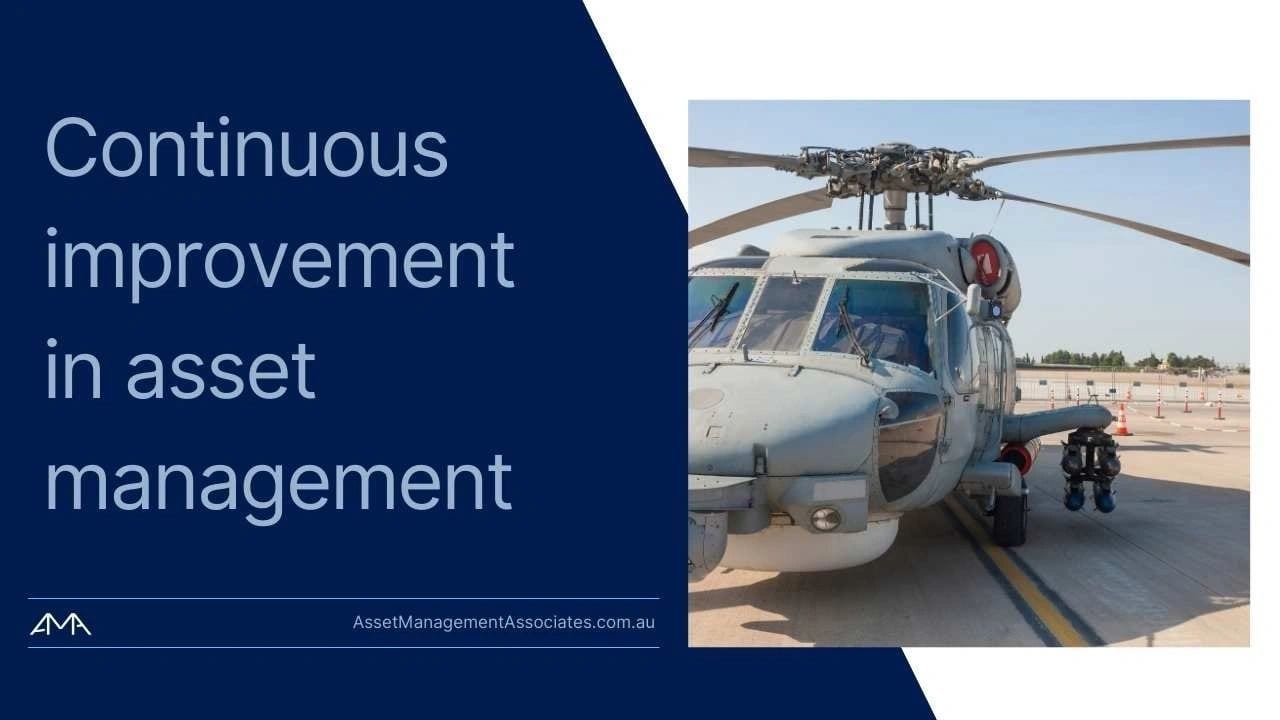
Continuous improvement in asset management
By Jarrod Chesher and Rachel Scott
Continuous improvement is key to success in any field. This is especially true in asset management, where small optimisations can lead to significant results. For a deeper understanding of the field, check out our Introduction to asset management systems. Here are 5 proven strategies for ensuring you are always improving your operations and meeting your organisational goals.
Table of Contents:
- Set realistic goals and track progress
- Use data analysis to identify improvements
- Implement best practices and optimise processes
- Foster a culture of innovation
- Embrace change and experimentation
1. Set realistic goals and track progress
It's crucial to have a clear vision of what you want to achieve and to track your progress over time. This systematic approach will help you identify areas that need improvement and keep your team motivated to move forward.
Set goals that are achievable and specific, and break them down into smaller, manageable pieces if necessary. For example, rather than setting a broad goal to "increase asset management efficiency," you could set a targeted goal to "decrease the maintenance admin and logistic delay time by 10 per cent." Learn more about measuring success in our Ultimate guide to asset management KPIs.
2. Use data analysis to identify improvements
Data analysis is essential for understanding how your asset management processes are performing. Look for areas where there are delays or inefficiencies, and identify ways to improve them.
Asset tracking software can be a helpful tool for collecting and analysing data. Look for a solution that offers features such as:
- Real-time asset tracking
- Workflow management
- Comprehensive reporting capabilities
- Predictive maintenance alerts
- Performance trend analysis
3. Implement best practices and optimise processes
There are many best practices for asset management that you can implement to improve your processes. Review existing literature and consult with experts in your industry to learn about best practices.
Some essential best practices for asset management include:
- Developing and implementing an Asset management policy and strategic asset management plan
- Ensuring you maintain a complete asset register
- Implementing an automated asset tracking system
- Standardising asset classification
- Implementing an asset retirement process, with sustainability at the forefront.
4. Foster a culture of innovation
Encourage your team members to be innovative and creative in their approach to asset management. This collaborative mindset can help you identify new ways to improve processes and find solutions to complex problems.
Create a structured process for evaluating and implementing new ideas. Ensure you:
- Establish clear channels for suggesting improvements
- Provide resources for testing new approaches
- Give credit where it's due
- Reward employees for their creativity and initiative
- Document successful innovations for future reference
5. Embrace change and experimentation
Change is inevitable, and asset management is no exception. Be prepared to embrace change and experiment with new ideas. This adaptable approach can help you discover improved ways to manage your assets and stay ahead of industry developments. For guidance on implementing change, check out our article on Breaking down business silos how to collaborate and succeed.
Maintain flexibility in your approach, and be sure to document your experiments and track the results so that you can learn from both successes and failures. This documentation becomes valuable institutional knowledge for future improvement initiatives.
Asset management is a dynamic field, and continuous improvement is essential for success. By implementing these five strategies - setting clear goals, leveraging data analysis, following best practices, fostering innovation, and embracing change - you can ensure your organisation consistently enhances its asset management processes.
Remember that continuous improvement is a journey, not a destination. Regular review and refinement of your processes will help maintain momentum and drive lasting positive change in your asset management practices. For more insights into achieving excellence, explore our guide on How asset management can help you achieve operational excellence.
To learn more about how reliability engineering can benefit your operations, contact our team to discuss your specific needs and requirements.
Join our growing community of asset management professionals. Follow us on LinkedIn and be part of the conversation.